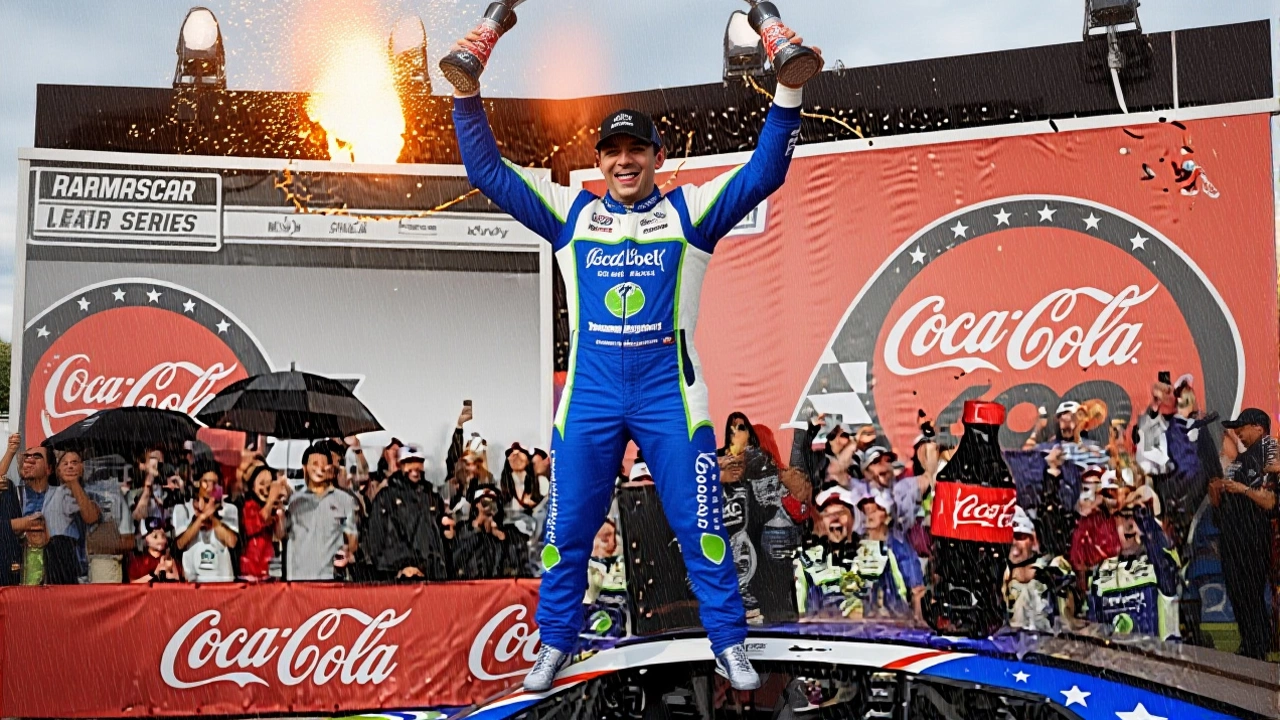
When Daniel Suárez, a driver from Monterrey, Mexico, took the checkered flag at the Coca-Cola 600 on Sunday, May 24, it wasn’t just about speed—it was about guts. Facing worsening rain and a chaotic late-race strategy session, Suárez made a bold call that changed everything: he pitted for only two tires instead of four. That split-second decision moved him into the lead right before officials called it quits due to weather, handing him one of the most dramatic victories in recent NASCAR history.
The race at Charlotte Motor Speedway never finished its scheduled distance. Instead, it ended 27 laps short—373 laps completed out of 400—after heavy rain forced a red flag with just three laps remaining. Suárez led those final 17 laps, holding off intense pressure from Christopher Bell and Denny Hamlin after a crucial restart with 31 laps to go. But here’s the twist: this win came after an early setback that nearly cost him the race entirely.
From Lap Down to Victory Lane
Suárez didn’t start strong. He qualified 14th and quickly found himself in trouble during the first stage when an unscheduled green-flag pit stop pinned him a lap down. In NASCAR terms, that’s like falling behind in a marathon because you stopped to tie your shoe while everyone else kept running. Most drivers would have written off their chances then and there.
But Suárez isn’t most drivers. Known for his aggressive style and strategic mind—he won the 2016 NASCAR O’Reilly Auto Parts Series championship as a rookie—he stayed patient. As the race progressed through various cautions and tire strategies, he steadily climbed back into contention. By the time a caution flew with 44 laps remaining, Suárez had positioned himself perfectly for the decisive move.
During that yellow period, teams faced a critical choice: take four fresh tires for better grip or stick with two worn ones to gain track position. Suárez chose the latter. It was risky—two-tire stops can leave cars struggling for traction—but it worked. He cycled to the lead, emerging ahead of rivals who opted for full service. “It was a gamble,” said one team insider, but Suárez trusted his car’s handling enough to make it pay off.
Rain Forces Early Finish
With Suárez leading under green, the tension mounted. On the final restart with 31 laps left, he got a strong launch and held off Bell and Hamlin for three laps before another caution appeared. Then came the rain—not light drizzle, but sheets of water that turned the track slick within minutes.
Officials brought the field to pit road for a nearly eight-minute red flag, evaluating whether conditions could improve enough to resume racing. They couldn’t. Time constraints meant drying the surface would push well past broadcast windows and safety limits. So they declared the race official—with Suárez still in front.
This outcome highlights how modern NASCAR races are shaped not just by skill but by timing, luck, and adaptability. Weather has become a regular factor at Charlotte, especially in spring events where thunderstorms roll in unpredictably. Last year’s Coke Zero Sugar 400 also saw weather interruptions, though none quite so decisive as this year’s finish.
A Tribute to Kyle Busch
After crossing the finish line, Suárez did something deeply personal: he dedicated the victory to Kyle Busch, his former teammate, boss, and friend. Busch passed away earlier this year, leaving a void in the racing community. For Suárez, winning the Coca-Cola 600—a prestigious event often seen as a crown jewel of the Cup Series—felt like the perfect way to honor someone who believed in him early on.
“He taught me how to think differently under pressure,” Suárez said in post-race interviews. “This is for him.” The emotional weight of the moment resonated beyond the podium, reminding fans why motorsports connect people across generations.
Top 10 Results and What’s Next
Behind Suárez, the top 10 included Ty Gibbs, Ryan Blaney, Joey Logano, William Byron, and Zane Smith—all capable contenders who fell short in the closing stages. Their performances reflect the competitive balance of the current field, where no single team dominates outright.
Looking ahead, attention turns to the upcoming races in the playoff chase. Suárez’s win boosts his standing significantly, while others will need to rebound quickly if they want to stay relevant. Meanwhile, questions linger about how NASCAR might adjust scheduling or protocols to minimize weather-related disruptions in future seasons.
Frequently Asked Questions
Why did Daniel Suárez choose a two-tire pit stop?
Suárez opted for a two-tire stop to gain track position during a caution with 44 laps remaining. Taking fewer tires meant less time on pit road, allowing him to cycle ahead of competitors who took four tires. This high-risk strategy paid off when he emerged in the lead and maintained control until the race ended prematurely due to rain.
How many laps were completed in the shortened Coca-Cola 600?
The race concluded after 373 laps, which was 27 laps shy of the originally scheduled 400-lap distance. Officials declared the event official once it became clear that drying the track wouldn’t be feasible within available time constraints, resulting in Suárez being credited as the winner based on his position at the time of the red flag.
Who were the main challengers to Suárez near the end?
Christopher Bell and Denny Hamlin posed the biggest threats to Suárez in the final stages. Both drivers pushed hard after the last restart with 31 laps to go, but Suárez managed to hold them off for three green-flag laps before another caution interrupted the action. Neither could overtake him before the race was halted.
What significance does the Coca-Cola 600 hold in NASCAR?
The Coca-Cola 600 is considered one of the most prestigious races in the NASCAR Cup Series calendar. Held annually at Charlotte Motor Speedway in late May, it covers 600 miles (or 400 laps) and tests endurance, strategy, and consistency. Winning it carries historical prestige and often serves as a momentum builder heading into the playoffs.
How did Suárez dedicate his win to Kyle Busch?
In his post-race interview, Suárez explicitly stated that the victory belonged to Kyle Busch, referencing their close professional relationship. Busch had previously served as both a teammate and mentor figure to Suárez, playing a key role in shaping his approach to competition. The dedication added emotional depth to an already thrilling performance.